Restaurant Operations & Table Setting
Tableware for a Japanese Steakhouse: Plates for Wagyu, Robata and Raw
The Cut Is the Centre
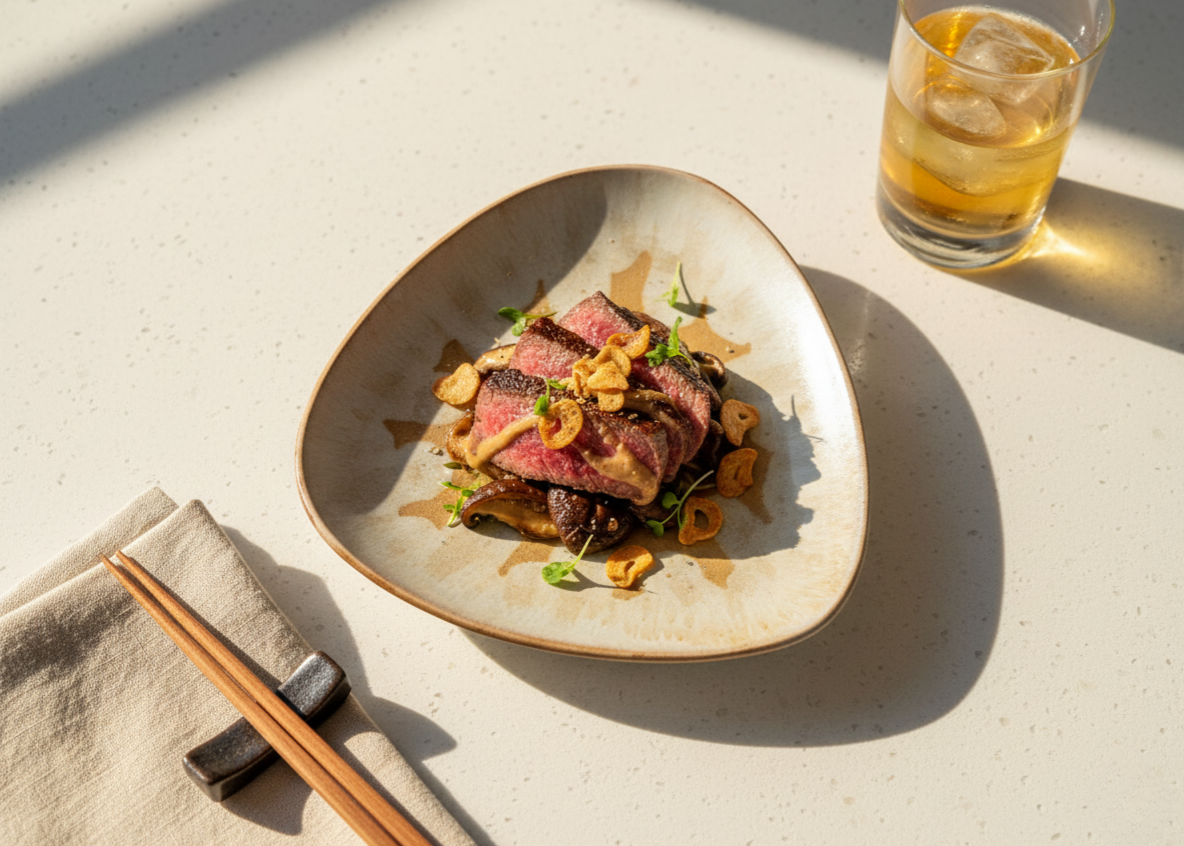
A Japanese steakhouse is built around a few things done with great care: premium beef, the heat of the robata or binchotan grill, and a raw bar that runs alongside it. The tableware has to frame those without competing. A slice of wagyu needs contrast and room. Crudo and sashimi need a cool, clean ground, and robata-grilled seafood needs a plate that holds heat and colour. Small sauces, salts and pickles need their own vessels.
Dark Glazes for Grilled Meat
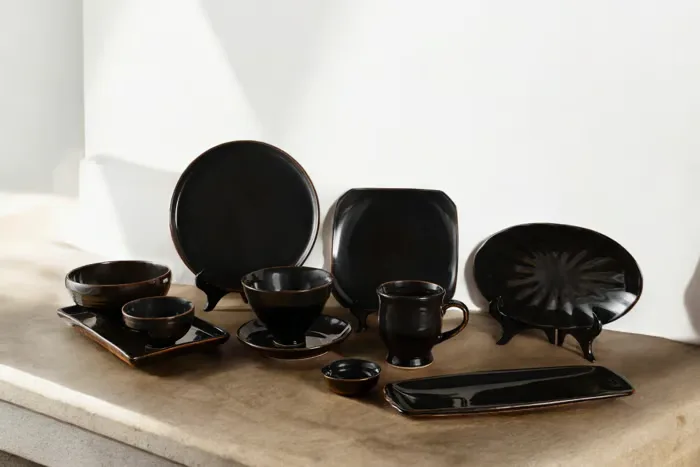
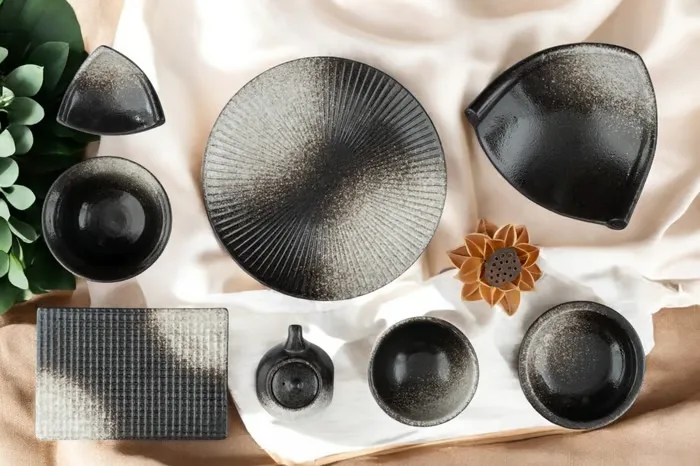
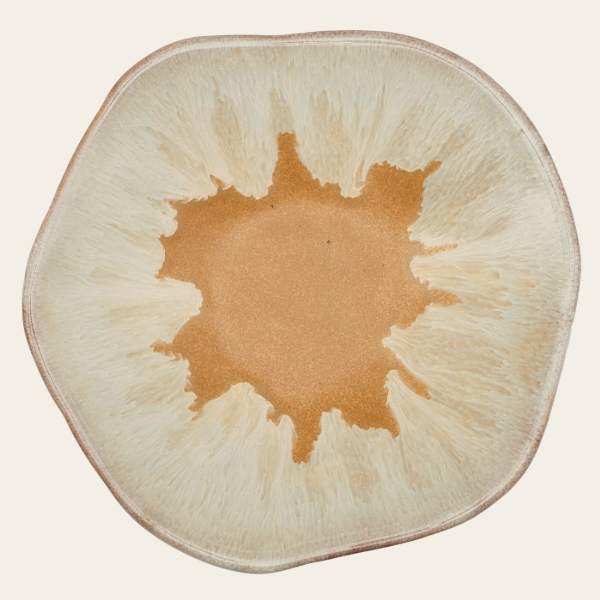
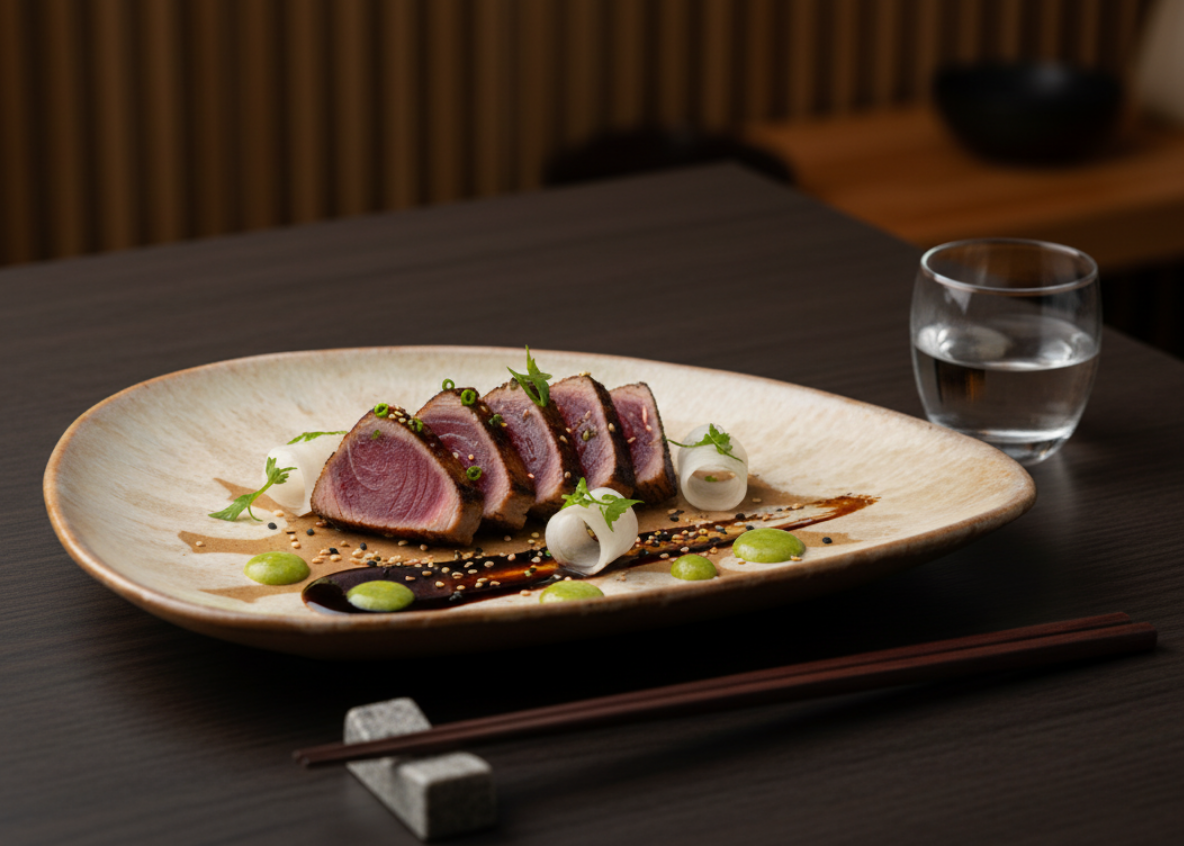
Seared beef reads best on dark or warm grounds. A matte black plate makes the colour of the meat stand out, and a warm, amber centre adds the glow of the grill to the plate.
Cool Blues for the Raw Bar
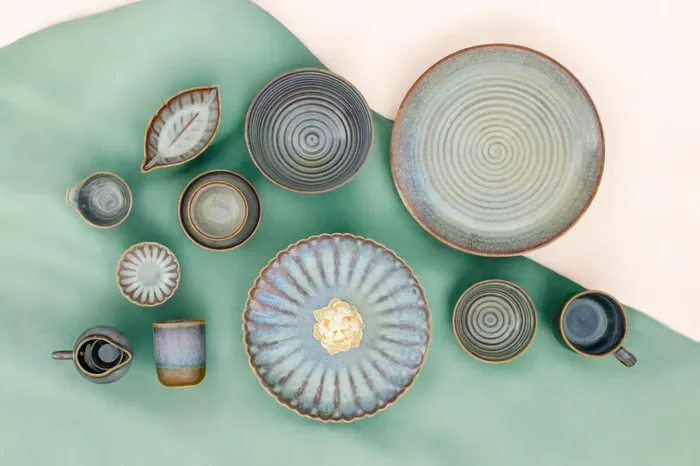
Crudo, sashimi, tataki and chilled starters look freshest on blue. Earthen blues with movement in the glaze keep the plate alive without adding colour to the dish.
Many Small Vessels
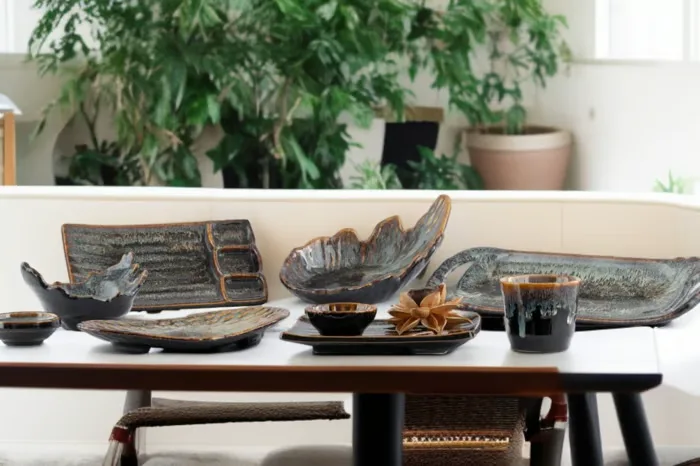
Japanese service puts many pieces on one table: a long tray for skewers, a small dish for salt, a sauce dish, a rice bowl, a cup for sake. Choose a few glazes and use them across many shapes, so the table looks like one set.
Practical Points
The range combines double-fired, fully vitrified porcelain with glazed stoneware, so it suits both upscale casual and fine dining. Both go in commercial dishwashers, standard ovens and microwaves, so plates can be warmed before service. They are not made for direct flame, grills or hobs, so keep them off the robata itself. For high-volume service, rounded rims resist chips best.
If you are planning a steakhouse or robata concept, request samples or ask us to prepare a proposal for your menu and room. Read How We Prepare a Tableware Proposal for a New Restaurant.
Recipes to Try
Our recipes show each dish on the piece it was plated on. Three Japanese dishes to start with:
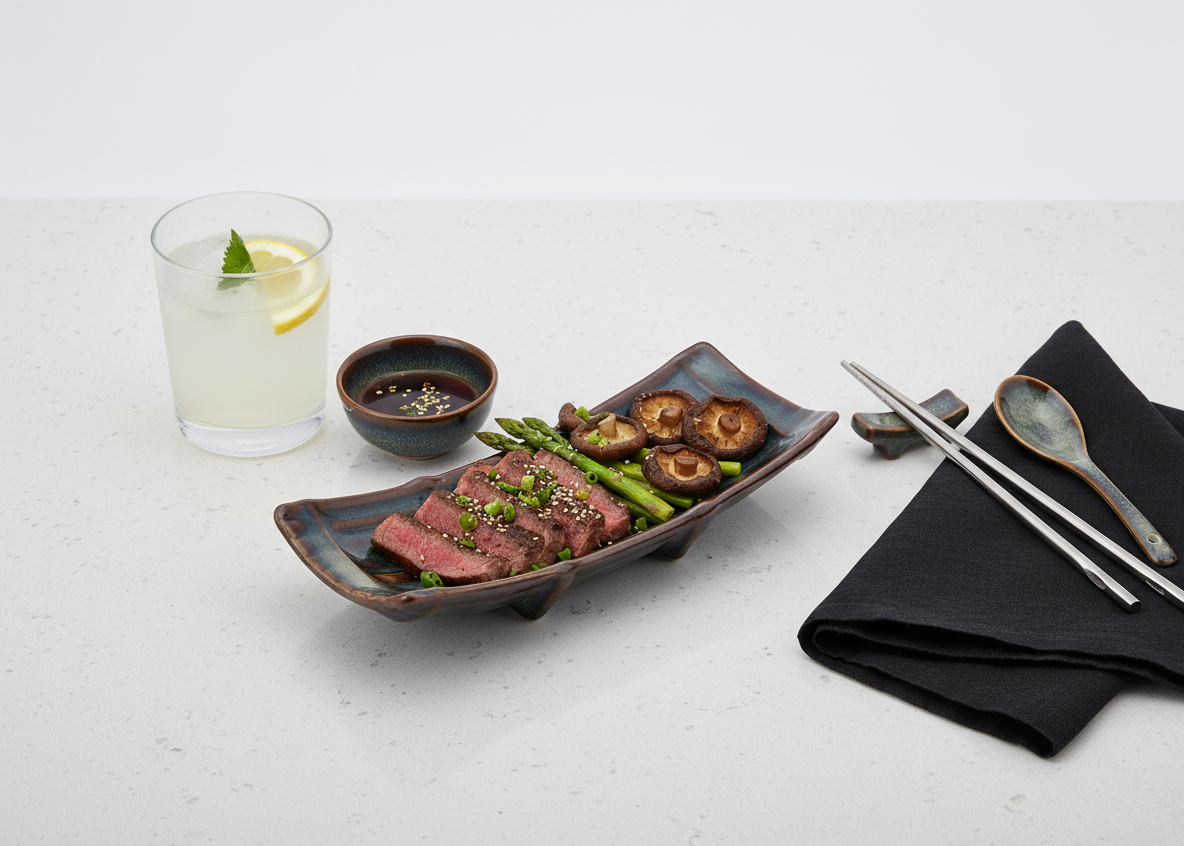
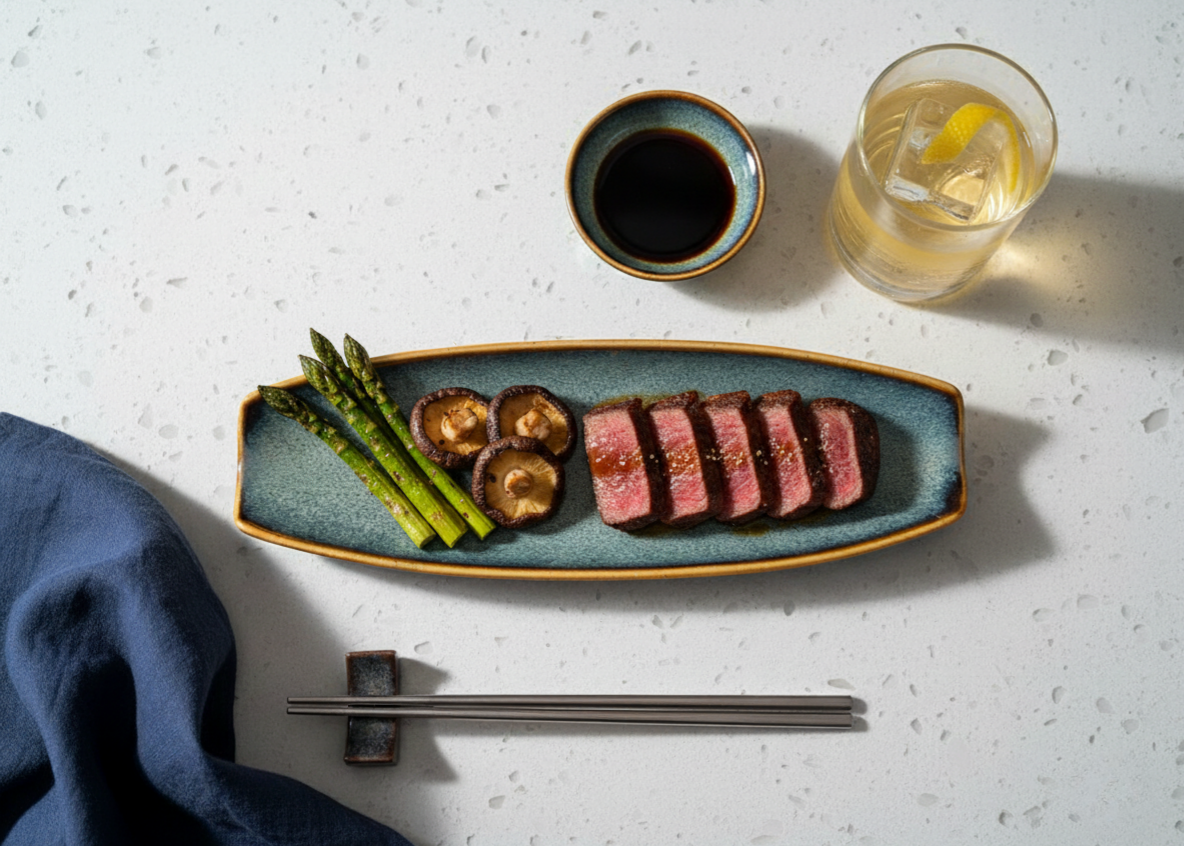 Wagyu Steak, Asparagus & ShiitakeOn Indigo Symphony
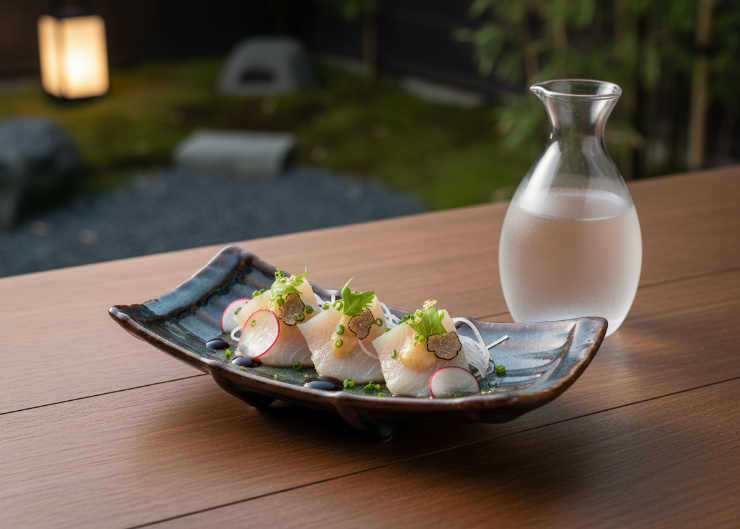 Seared Tuna Tataki, Ponzu & Grated GingerOn Emerald Essence
 Hokkaido Scallop Sashimi, Yuzu & ChilliOn Emerald Essence