
Buyer Education
There Is No Standard Way to Choose Tableware

Every restaurant that has ever ordered from us arrived at the decision differently. Some settled it in an hour on a video call. Others took three days, a flight, and a chef cooking a full menu onto the samples before anyone signed anything.
There is no correct route. There is only the one that suits how far along you are, how much time your kitchen can spare, and how much of the decision rests on holding the piece. Here are the four we actually run, and when each is the right one.
1. We Ship Samples, and We Choose Over Zoom
The fastest route. We send a sample set to your kitchen, then walk through the catalogue together on a call — colours, shapes, sizes, the pieces that pair.
This works when the menu is already settled and the room already exists in your head. If you know you need a wide-rim plate for a fish course and a deep bowl for the small plates, a screen is enough to narrow it. Most of our orders start here.
What it will not do is show you the thing you were not looking for.
2. We Come to You
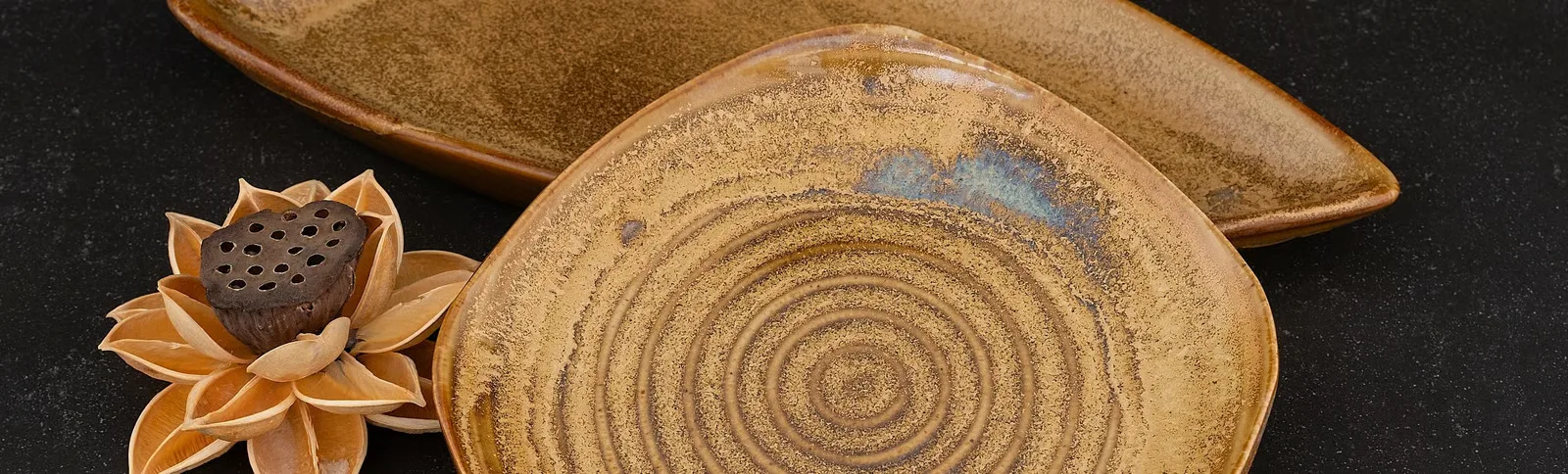
We pack a case of samples and turn up at your restaurant. It is what we have done most often — Habbibi in Manchester started this way, from a walk-in with a few pieces under our arm.
The advantage is that the chef never leaves the pass. Everything gets judged in the room where it will be used, under the lighting it will live under, which matters more with reactive glazes than most people expect. The constraint is the suitcase: we bring what fits, not everything we make.
3. You Come to Us
The reverse, and rarer. When a group comes to our office, we can put the full range out at once — every collection, every glaze, including the pieces too heavy or too fragile to travel.
That changes how the choosing goes. Pieces get picked up, put down, and returned to an hour later next to something else. Nothing is on a clock. It is where the unexpected combinations come from.
4. We Come, We Stay, and the Chef Plates on Them
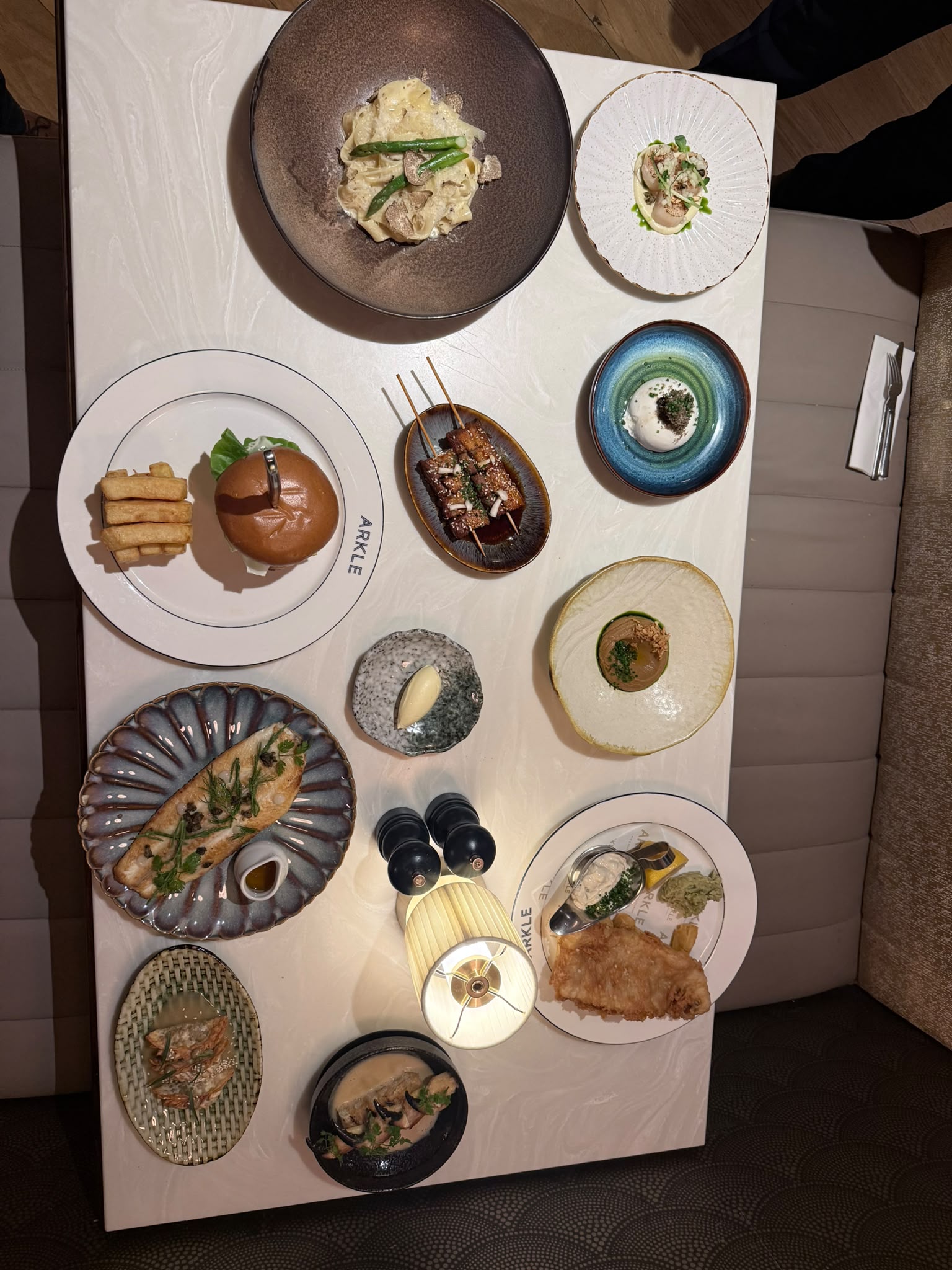
The longest route, and the most convincing. A full sample set goes out ahead of time. Then we come and spend days with the team, going through shapes, making the selection, and — the part that settles it — watching the chef plate real dishes onto the pieces.
A shape either gives the food room or it does not. A glaze either flatters the plate or fights it. You cannot know from a photograph, and you cannot fully know from an empty plate in your hand. You know when the dish is on it.
How to Pick Your Route
If your menu is written and your opening date is close, start with route one. If your chef cannot leave the kitchen, ask for route two. If you are choosing for more than one venue, or the concept is still forming, routes three and four will save you a reorder later.
And if you are not sure, say so. We would rather spend the time up front than have you live with a plate that does not suit the food.
← Back to the Journal