Buyer Education
What Handcrafted Really Means in Restaurant Porcelain
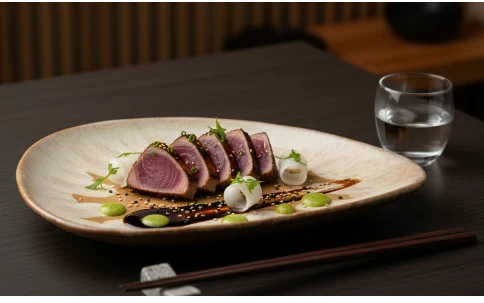
"Handcrafted" gets used loosely in tableware marketing. For us it means something specific: every piece is thrown, pressed or cast by hand in Vietnam, glazed by hand, and fired twice before it reaches your kitchen. That process is why the tableware looks and behaves the way it does — and why it suits some kitchens better than others.
What Makes It Different From Mass-Produced Porcelain
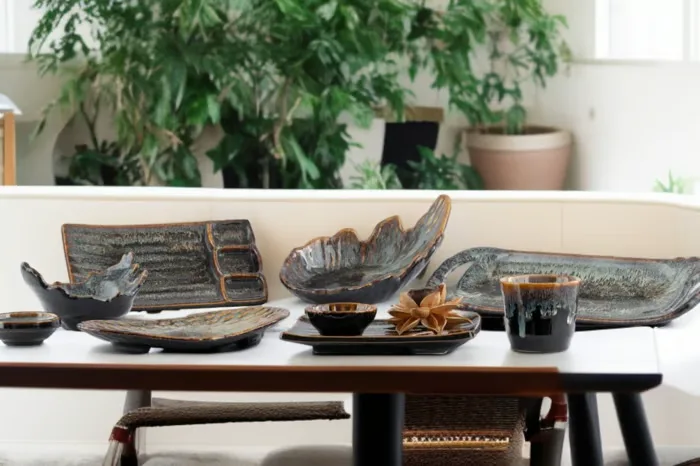
Factory porcelain is extruded or machine-pressed at volume, glazed in a uniform spray pass, and fired once to a predictable result. Ours is shaped by hand, one piece at a time, and finished with reactive glazes that respond to heat and atmosphere in the kiln rather than laying flat and even.
The result is controlled variation. No two pieces in a reactive-glaze run are identical, and that is the point rather than a defect — it is what separates a piece from a set bought off a shelf.
Why Restaurants Choose It
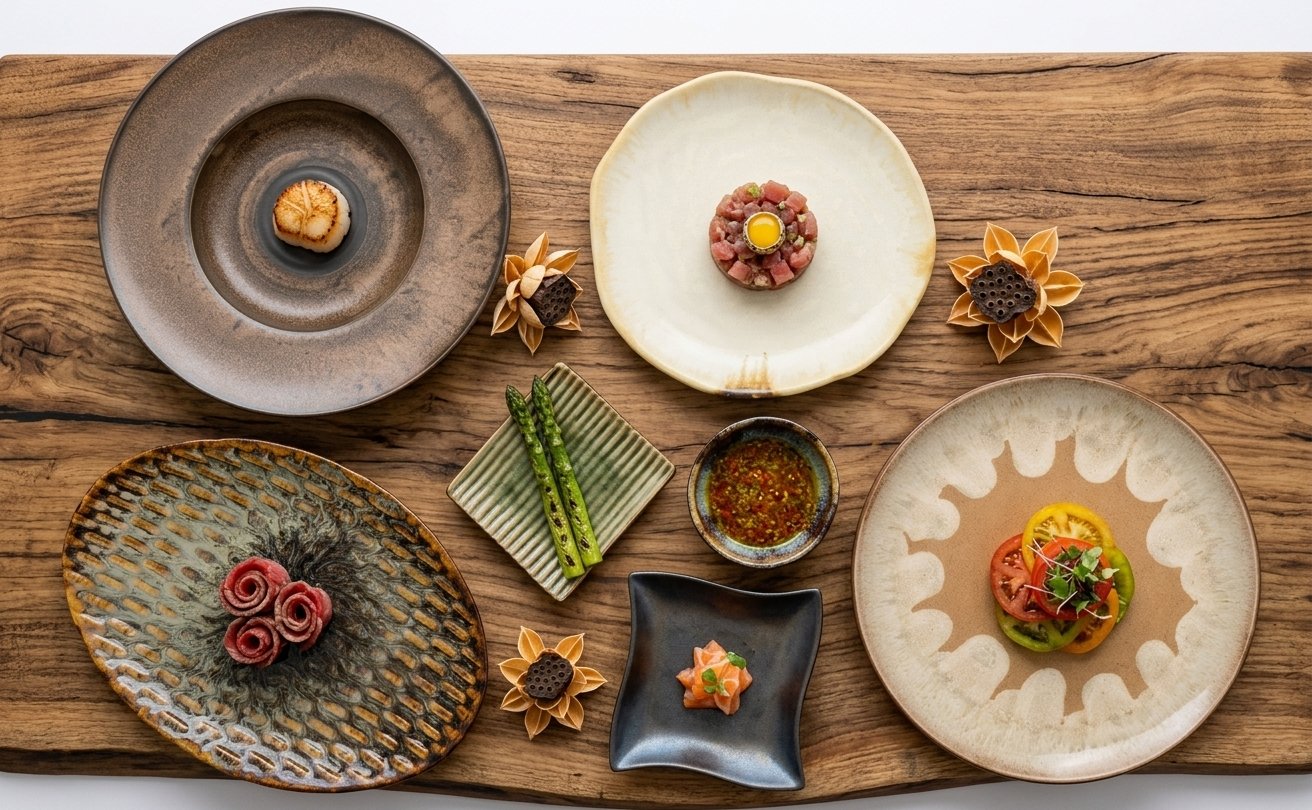
Two reasons come up most often on calls. The first is the pass: a plate with depth and colour movement reads differently under service lighting than a flat white one, and it changes how the food photographs and how it looks carried to the table. The second is durability — the porcelain body is vitrified and double-fired, built to survive a working kitchen's stacking, dishwashers and daily handling, not just a dinner party.
How Sourcing Works With Us
We work from a brief, not a catalogue. Most projects start with a call about the menu, the room and the budget, then move into samples — shipped to your kitchen, brought to your pass, or judged with the chef plating real dishes onto them. There are four routes we run, depending on how far along you are.
What to Check Before You Order
Ask about food-safe glaze testing, chip and stack tolerance for your service volume, minimum order quantities, and lead times — bespoke production runs on a different clock than a warehouse SKU. A supplier who welcomes those questions before you commit is telling you something about how they will handle the order after you do.
How Double-Firing Works
Our Circle, Square and Triangle porcelain is fired twice. The first, lower bisque firing hardens the shaped clay so it can be handled and glazed. After hand-glazing, the second, high-temperature firing vitrifies the body and fuses the glaze to it. The result is dense and non-porous, with water absorption below 0.5%. Our article on double-firing explains why it matters in service.
Porcelain or Stoneware?
We also make stoneware: the Diamond Selection, single-fired at 1200–1250°C and fully glazed. It is lighter, with an earthier character, and is our more accessible range. Porcelain suits restaurants that want the most refined finish and the highest durability; stoneware suits rustic menus, sharing plates and tighter budgets. Both are safe for commercial dishwashers, standard ovens and microwaves.
What It Costs
Handcrafted porcelain costs more per piece than mass-produced white china, because it is shaped and glazed by hand and some pieces are lost in the kiln. The fairer comparison is cost over the life of the plate, including breakage and replacements. We share a price list per Selection in your local currency once we understand your menu and quantities.
FAQ
Is handcrafted porcelain suitable for commercial kitchens?
Yes, when it is vitrified. Our double-fired porcelain has water absorption below 0.5% and is safe for commercial dishwashers, ovens and microwaves.
Does every handcrafted piece look different?
The shape and size stay consistent. Reactive glazes vary from piece to piece, which is part of the finish.
How do I choose between porcelain and stoneware?
Porcelain for the most refined finish and highest durability; stoneware for an earthier look, lighter weight and a more accessible price.
For the full range, see our handcrafted porcelain tableware for restaurants, or talk to the makers about your menu.
← Back to the Journal