Vietnamese Craft & Origin Story
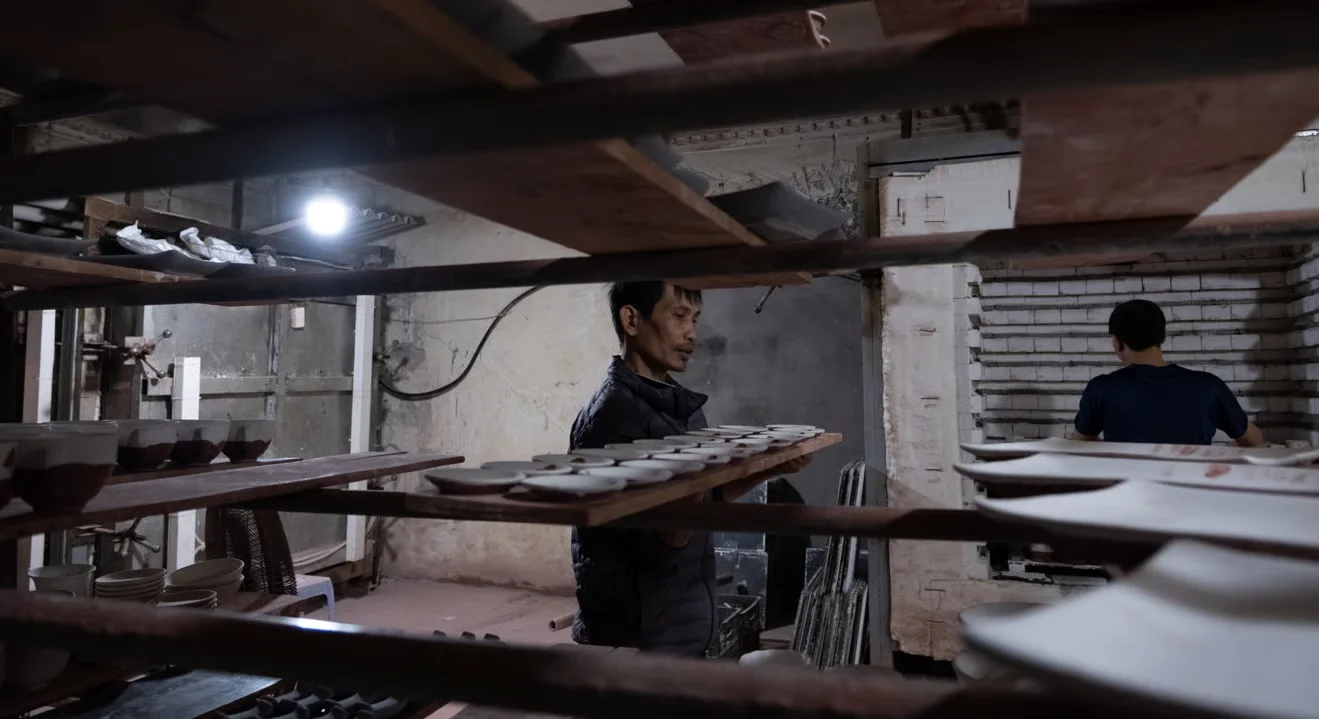
Inside the Kiln: How an Annamis Piece Is Made
From a lump of raw clay to a finished plate on your table — a walk through the stages every Annamis piece passes through before it ships.
Most restaurants never see how their tableware is actually made. It arrives packed in a crate, and the making disappears behind it. But the reason a handcrafted piece performs differently in service — feels different in hand, ages differently over years of stacking and washing — comes down entirely to a process most buyers never get to watch.
Here is what actually happens to a piece before it reaches your pass.
Shaping: Wheel, Mould, or Hand-Press
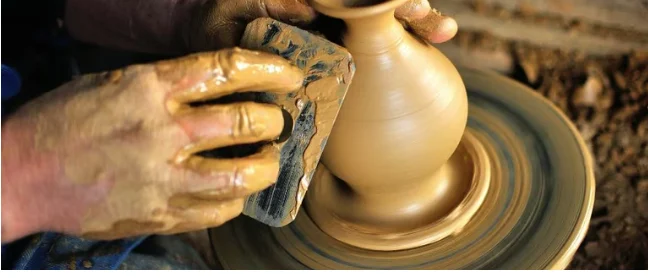
Every piece begins as raw clay, wedged by hand to remove air pockets that would otherwise crack the piece under heat later. From there, shaping happens one of three ways depending on the form: thrown on the wheel for round pieces like bowls and cups, pressed into plaster moulds for plates and more structural shapes, or hand-built for anything irregular. Each shaped piece is left to dry slowly over one to two days — rushed drying is one of the most common causes of warping in cheaper production.
The First Firing: Bisque
Once dry, the piece goes through its first firing — a bisque firing at a relatively low temperature that hardens the clay enough to handle without breaking, but leaves it porous enough to absorb glaze evenly in the next stage. This is also the point where any structural flaw shows up. A piece that survives bisque firing with no cracking has cleared the first real quality gate.
Hand-Painting and Glazing
This is the stage that separates handcrafted tableware from mass-produced hotelware. Glaze is applied by hand — brushed, dipped, or layered depending on the finish — and for decorated pieces, an artisan hand-paints detail directly onto the bisque before glazing seals it in. No two pieces get exactly the same amount of glaze in exactly the same place, which is precisely why reactive finishes carry natural variation piece to piece.
The Second Firing: Where the Glaze Comes Alive
The glazed piece is fired a second time, at a much higher temperature, which is where double-firing earns its name and its reputation. This second firing fuses the glaze permanently to the clay body, closes the surface to moisture, and is what makes a piece genuinely dishwasher- and commercial-kitchen-safe rather than merely decorative.
Not every Annamis piece follows this exact path — our Diamond Selection stoneware is fired once, at a significantly higher temperature than a standard bisque or glaze fire. It reaches the same practical result, a fully vitrified, dishwasher-safe body, through a different process built for a different price point.
Quality Control Before It Ever Leaves Vietnam
After the kiln, every piece is inspected by hand for glaze defects, warping, and chips before it is packed. Pieces that don't meet standard are pulled at this stage — not after they've already been boxed, shipped, and unpacked on your line.
Whether a piece is fired twice as porcelain or once at a higher heat as stoneware, it has already survived a kiln, a shaping process, and a hand inspection — long before a single dish is served on it.