
Buyer Education
How to Care for Handcrafted Porcelain in a Working Kitchen
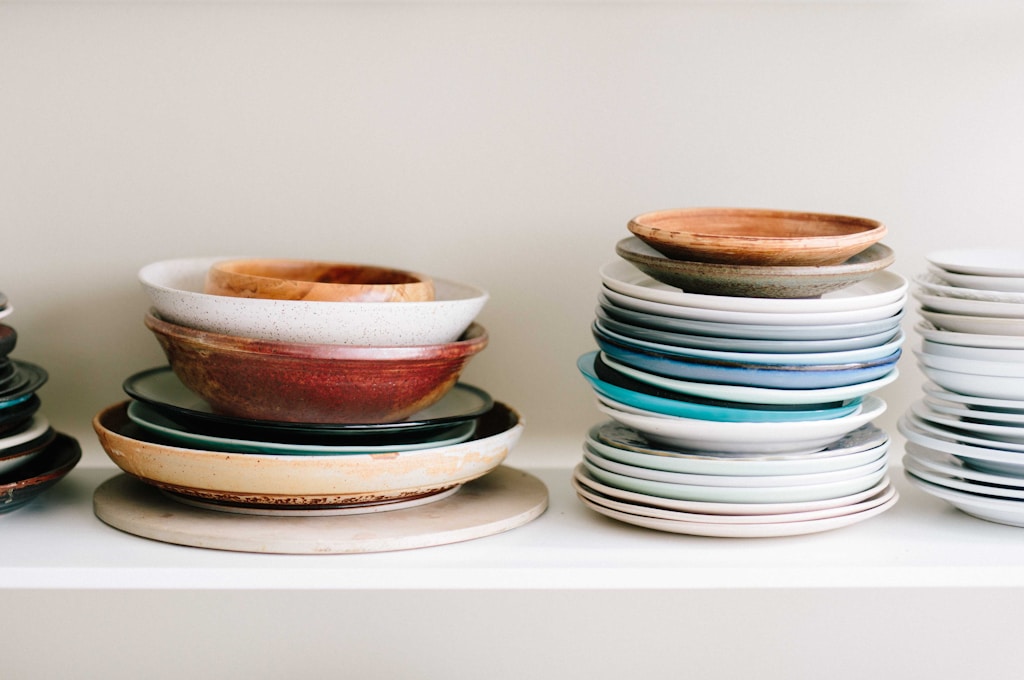
Handcrafted porcelain isn't fragile — but it isn't identical to mass-produced hotelware either. What actually damages it, what doesn't, and how to keep it in service for years.
The most common misconception restaurants bring to handcrafted tableware is that it needs to be treated like fine china at home — hand-washed, rarely stacked, kept away from anything hot. In practice, a properly double-fired piece is built to survive commercial service. The damage that actually happens usually comes from a handful of avoidable habits, not the material itself.
Is It Dishwasher and Oven Safe?
Yes. Our Circle, Square and Triangle porcelain is double-fired and fully vitrified. Our Diamond Selection is single-fired stoneware, fired at 1200–1250°C and fully glazed, with low water absorption (2–3%). Both are made for restaurant and hotel service and are safe for commercial dishwashers, standard ovens and microwaves. It's worth asking any tableware supplier for their firing specification before ordering, since not every single firing reaches a high enough temperature to do this.
What Actually Chips a Plate (It's Rarely the Dishwasher)
Chipping almost always happens at the edge, from impact against another hard surface — plates knocked together in a bus tub, stacked without care during a rush, or dropped into a sink on top of cutlery. Dishwashers, even commercial high-heat ones, are rarely the cause. The fix is procedural, not material: train the team to slide rather than stack-and-drop, and keep cutlery separated from plates in the wash cycle.
Stacking, Storage and Handling in a Busy Pass
Stack by shape and size, not by convenience — mixed stacks concentrate weight on edges rather than distributing it across the full base. Textured and reactive-glaze pieces are slightly more prone to surface contact wear when stacked directly against each other at volume; a thin liner between stacks in high-turnover storage extends the finish's life considerably.
Reactive Glazes and Everyday Wear
A reactive or textured glaze will show gentle patina over years of use — this is normal, and it's part of the same handmade character that made the finish desirable to begin with. It is not the same as damage. Genuine damage shows up as a chip, a crack, or a dull grey scratch pattern from metal utensils dragged repeatedly across the same spot — none of which is inevitable with reasonable handling.